











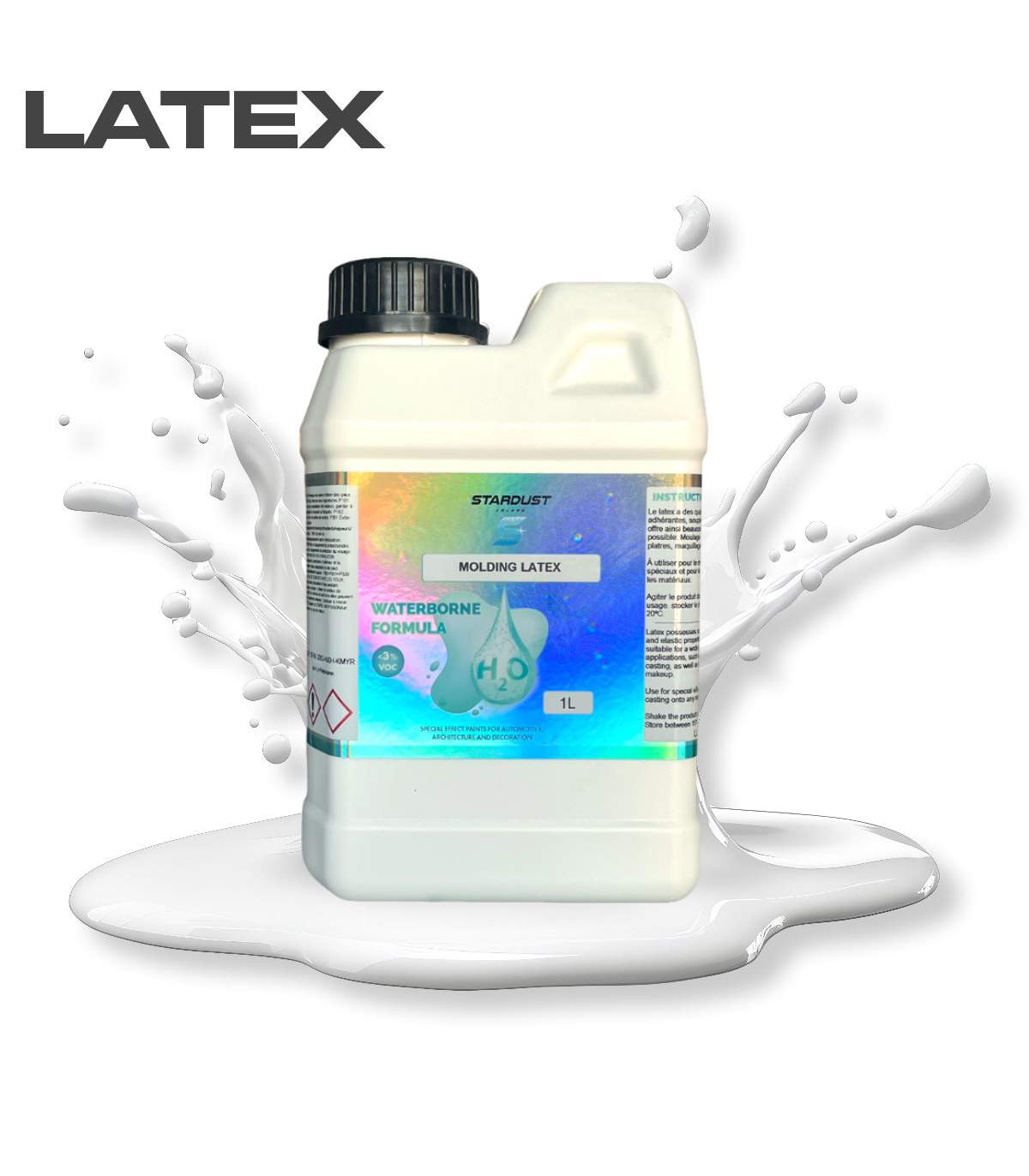
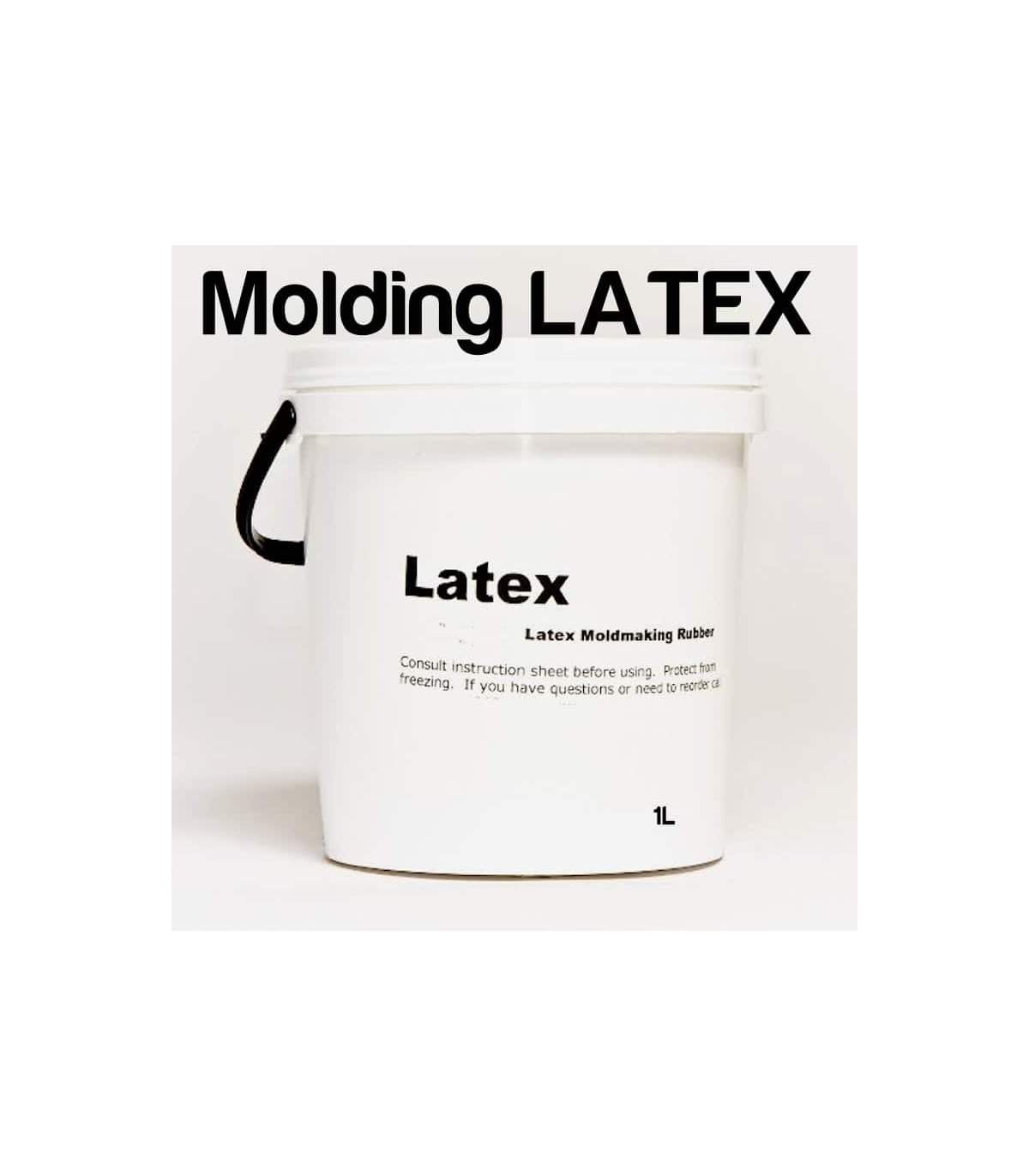

Liquid latex in 1L Pot
Natural, fast drying, ultra flexible and extensible
In stock
Natural white product with a faint smell of ammonia, thinnable in water, can be tinted. Dries quickly, non thinnable when dry! Tools must be cleaned with water prior to drying!
Latex has anti-adherent, flexible, elastic properties, and thus offers many possible uses: resin and plaster moulding, makeup and special effects (false scars, wounds, masks, for theatre, etc.)
Warning! Do not apply on or near head and body hair!
Product not classified as dangerous
Do not freeze
Light beige colour
To use for special effects makeup
Total solids content: 60.5%
Ammonia content: 0.68%
Ford Viscosity Cup #3 at 250C: 35.0 seconds
Gently shake the product before use. Store the product between 15:C and 20:C.
Technical summary of liquid pre-vulcanised natural latex (L-A):
This product is a white natural latex, derived from rubber trees, pre-vulcanised and stabilised with a low ammonia content (< 0.29%), which limits odours while ensuring stability. It comes in a thick liquid or paste form and offers excellent elasticity, with a breaking strength of up to 900% elongation.
The product sets simply by drying with hot air, with approximately 5% shrinkage for the liquid version. Latex must be stored away from air and light, and cannot withstand freezing in its liquid state. The recommended operating temperature range is between 5 and 25°C.
It is mainly applied by successive dipping, with a brush/roller (stamping) or using the "hollow" technique with a counter-mould. Latex must never be poured in bulk: it must be applied exclusively in successive layers, with a maximum of 7 layers to obtain a thickness of approximately 3 mm.
To avoid bubbles, the first layer must be applied in liquid latex, while the subsequent layers can be applied in thick latex or paste. Latex is compatible with plaster or wax moulds, but resins cause it to wear out.
Colouring is possible using pigment pastes or acrylic bases, and a light loading with mineral powders is possible, at the expense of elasticity. Contact with copper, iron and tin is prohibited. Heat accelerates drying, without exceeding 67°C.
Finally, talc can be used to preserve finished moulds. Approximately 7% of the population is allergic to latex: contact with the skin and eyes in liquid form should be avoided, and stained textiles are irrecoverable.